Not sure what to wear for an interview? You do not always need a full suit, but everyday casual clothes may look too relaxed. Smart casual attire offers a middle ground, combining neat, comfortable clothing with a professional appearance.
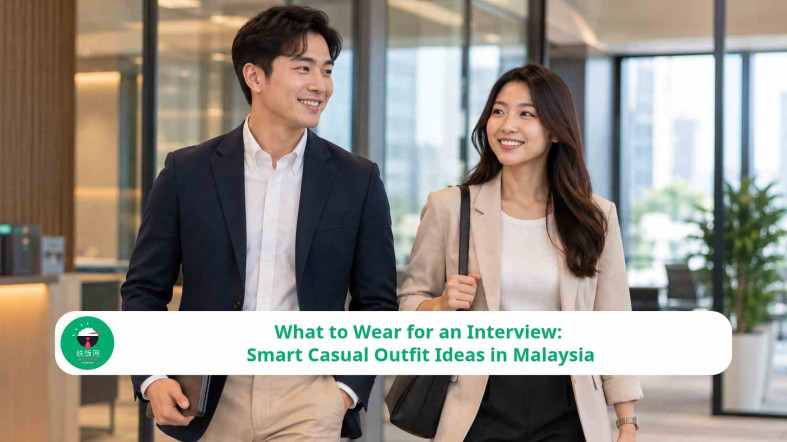
What to Wear for an Interview: Smart Casual Outfit Ideas in Malaysia

by AJobThing Team
Oct 20, 2026
at 12:00 PM
Choosing what to wear for an interview depends on the company, role and interview format. A technology startup may have a more relaxed dress code than a bank, law firm or corporate office. In Malaysia, it is also important to consider the weather, workplace expectations and whether you feel comfortable in your chosen outfit.
This guide shares smart casual outfit ideas for men and women, including traditional Malaysian attire, industry-specific tips and a practical checklist to help you decide what to wear for an interview.
Quick rule: If the recruiter has not specified a dress code, aim for one step more polished than what employees normally wear. If you are unsure, ask the recruiter or choose a slightly more formal outfit that still feels comfortable.
Smart Casual Attire: Visual Examples
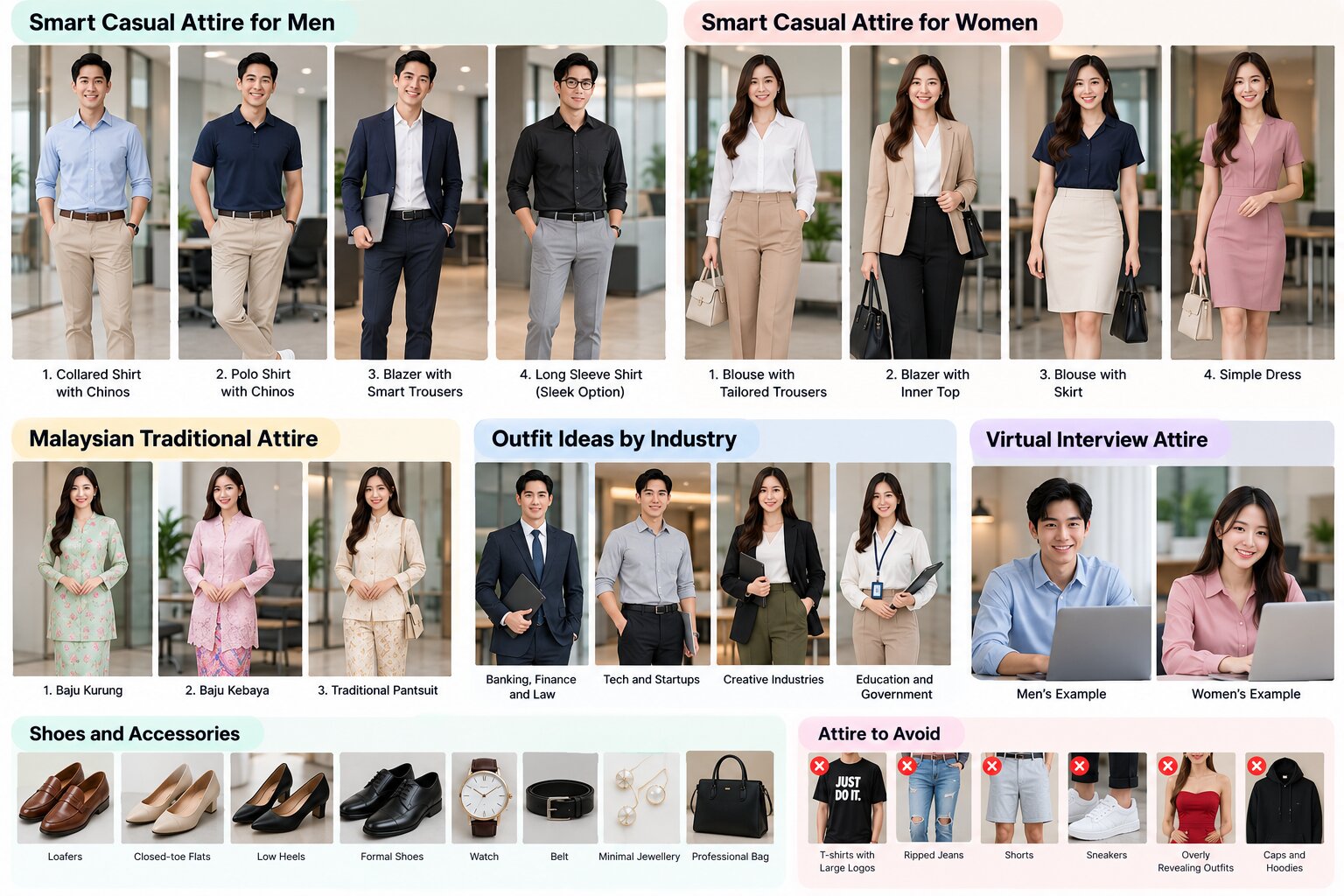
Use this visual guide to compare interview outfit ideas for men and women, Malaysian traditional attire, industry settings, virtual interviews, shoes and accessories, and outfits to avoid.
What Is Smart Casual Attire?
Smart casual combines polished pieces, such as a collared shirt, blouse, tailored trousers or blazer, with relaxed items that are still clean and well-fitted. It is generally less formal than a full business suit but neater than everyday casual wear.
| Dress Code | Typical Outfit | When It May Fit |
|---|---|---|
| Casual | Plain T-shirt, jeans and clean sneakers | Very relaxed workplaces when the recruiter confirms casual attire is suitable |
| Smart casual | Collared shirt or blouse, chinos or tailored trousers, loafers or clean shoes | Many startup, creative, customer-facing and general office interviews, depending on company culture |
| Business formal | Matching suit, formal shirt or blouse and dress shoes | More formal corporate, finance, law or senior-level interviews when expected |
Smart casual does not mean the same thing at every company. Check the interview invitation and company website. When in doubt, ask HR what attire is appropriate.
Smart Casual Attire For Men
Collared Shirt With Chinos Or Tailored Trousers
Example: a light collared shirt paired with neutral chinos and loafers.
A plain button-down shirt in white, light blue or another muted colour is an easy starting point. Pair it with chinos or tailored trousers in navy, charcoal, beige or black. Tuck in the shirt if it looks neater with the chosen trousers, and use a belt that works with your shoes.
- Good choice: a pressed Oxford shirt, well-fitted chinos and clean loafers.
- Check the fit: the shirt should sit comfortably across the shoulders and not pull at the buttons.
- Avoid: visibly wrinkled shirts, ripped jeans, shorts and loud prints unless the company has specifically invited a very casual style.
Polo Shirt For A Relaxed Workplace
Example: a plain polo shirt with chinos for a relaxed workplace.
A plain polo shirt can work for some startup, retail, operations or technology interviews when the company culture is relaxed. Choose a solid colour, a structured collar and a fit that is neither tight nor oversized. Pair it with chinos or tailored trousers rather than sports shorts.
If you are interviewing for a corporate role or are unsure of the dress code, choose a button-down shirt instead. It is easier to make an outfit slightly less formal than to correct an outfit that looks too casual.
Add A Blazer For A More Polished Look
Example: a navy blazer adds polish to a simple shirt and trousers.
A blazer can make a simple shirt-and-trousers outfit look more interview-ready. Navy, charcoal and black are versatile choices. You do not need a matching suit unless the role or recruiter expects business formal attire.
- Choose a blazer that sits neatly on your shoulders.
- Wear it with a plain shirt and tailored trousers or chinos.
- Remove the blazer if the environment is more relaxed, while keeping the rest of the outfit neat.
Smart Casual Attire For Women
Blouse With Tailored Trousers
Example: a simple blouse with tailored trousers.
A blouse or button-down shirt paired with tailored trousers is a practical interview outfit. White, cream, light blue, navy and other muted shades are easy to coordinate. Choose a fit that lets you sit, walk and move comfortably without needing constant adjustments.
- Good choice: a simple blouse, straight-leg trousers and closed-toe flats or loafers.
- For a more formal look: add a blazer or structured cardigan.
- Avoid: transparent fabric without suitable lining, distracting prints or clothing that restricts movement.
Blouse With A Skirt Or A Simple Dress
Example: a simple blouse with a knee-length skirt.
A knee-length or longer skirt, or a simple dress with a suitable neckline, can also work for a smart casual interview. Keep the silhouette comfortable and professional. If you choose a dress, consider bringing a cardigan or blazer for a more structured finish.
Choose flats, loafers or low heels that you can walk in comfortably. The aim is to feel prepared for the interview, not to spend the meeting adjusting your clothes or footwear.
Baju Kurung and Traditional Malaysian Attire
Example: a neat, traditional baju kurung.
Traditional clothing can be a suitable and professional choice for interviews in Malaysia. A well-kept baju kurung, a modest pantsuit or another traditional outfit can look polished without requiring Western-style office wear.
- Choose a clean, pressed outfit that fits comfortably.
- Use simple accessories and footwear that suit the role and setting.
- Consider the company’s dress code and any instructions in the interview invitation.
There is no single outfit every candidate must wear. Choose clothing that respects the workplace setting and allows you to feel comfortable and confident.
What Shoes And Accessories Should You Choose?
Shoes
Loafers, simple flats, closed-toe low heels and clean formal shoes are useful options. Choose footwear in good condition that you can walk in comfortably.
Belts and Watches
A simple belt or watch can finish an outfit without drawing too much attention. Match the level of formality to the rest of your clothing.
Bags and Folder
Use a neat bag or folder for your CV, portfolio and interview notes. Keep it organised so you can find documents quickly.
Jewellery and Accessorie
Keep accessories comfortable and practical. Choose items that complement the outfit rather than distract from the conversation.
How To Dress For Different Industries
| Industry or Role | Outfit Starting Point | What to Check |
|---|---|---|
| Banking, finance and law | Tailored trousers, formal shirt or blouse, blazer and dress shoes | Consider business formal if the invitation or company culture calls for it. |
| Technology and startups | Collared shirt or polished polo, chinos and clean shoes | Keep the outfit neat even if the office dress code is relaxed. |
| Creative and marketing roles | Smart trousers, simple top and one subtle personal style detail | Balance individuality with a professional appearance. |
| Retail and customer service | Collared shirt or blouse, tailored trousers and practical shoes | Choose an outfit that looks presentable and suits a customer-facing role. |
| Education and public-facing roles | Blouse or collared shirt, tailored trousers or traditional attire | Prioritise neatness, comfort and the organisation’s expectations. |
These are starting points, not strict rules. Company policies and interview instructions take priority over general outfit advice.
What To Wear For A Virtual Interview
Example: a neat blouse and tidy setup for a virtual interview.
For a virtual interview, dress as you would for an in-person meeting, even if the camera only shows your upper body. A collared shirt, blouse, blazer or neat traditional outfit can work well. Wear the complete outfit so you are prepared if you need to stand up or move during the call.
- Test how the outfit looks on camera before the interview.
- Choose solid colours or subtle patterns that do not compete with your face.
- Use lighting that clearly shows your face and keep the background tidy.
- Check your camera, microphone and internet connection ahead of time.
FAQs
What is smart casual attire for a job interview?
Smart casual combines polished clothing, such as a collared shirt, blouse, tailored trousers or blazer, with comfortable pieces that are still neat. The exact outfit depends on the role and company dress code.
Can I wear jeans to a smart casual interview?
Dark, clean jeans may be suitable for some relaxed workplaces, but they are not the safest default for every interview. Chinos or tailored trousers are more versatile if you are unsure.
Is a blazer necessary for smart casual attire?
No. A blazer can make an outfit look more polished, but a well-fitted shirt or blouse with tailored trousers can also work. Follow the recruiter’s instructions and the company’s dress code.
Can I wear baju kurung to a job interview in Malaysia?
Yes. A clean, pressed baju kurung or another neat traditional outfit can be appropriate for many interviews in Malaysia. Consider the role, workplace and any specific dress code instructions.
What should I wear for a virtual interview?
Choose a professional top, blouse, blazer or traditional outfit, and dress fully rather than only preparing what the camera shows. Test your outfit on camera and make sure the lighting and background are suitable.
What should I do if I do not know the interview dress code?
Check the interview invitation and the company’s public information. If it is still unclear, ask the recruiter what attire they recommend. When you cannot confirm, choose a neat outfit that is slightly more formal than everyday casual wear.
Ready for Your Next Interview?

Now that you know what to wear, take the next step towards your career goals. Explore job opportunities across Malaysia and find a role that matches your skills and ambitions.
Read More
- Virtual Interview Tips: How to Prepare, Answer Questions and Make a Good Impression
- Interview Checklist: Things To Prepare Beforehand
- How to Introduce Yourself in a Job Interview (Step-by-Step Guide)
- 10 Questions to Ask During a Job Interview
- How to Stand Out in a Virtual Interview: Tips to Impress Employers