Customer Service Career Path

The career path of customer service can vary depending on individual goals, company structure, and industry. Here is a general overview of a typical career path for customer service:
1. Entry-Level Customer Service Representative:
Responsibilities: Handle basic customer inquiries, provide information about products or services, and resolve straightforward issues.
Skills: Strong communication skills, patience, and ability to multitask.
2. Advanced Customer Service Representative:
Responsibilities: Take on more complex customer issues, assist with escalated cases, and provide specialized product knowledge or support.
Skills: Problem-solving skills, in-depth product knowledge, ability to handle challenging situations.
3. Senior Customer Service Representative:
Responsibilities: Handle escalated customer complaints, provide guidance to junior representatives, and assist in implementing new customer service strategies.
Skills: Leadership skills, mentoring abilities, and experience in handling difficult situations.
4. Supervisor or Team Leader:
Responsibilities: Oversee a team of customer service representatives, set performance goals, and ensure the team meets or exceeds customer service standards.
Skills: Team management, performance evaluation, leadership, and communication skills.
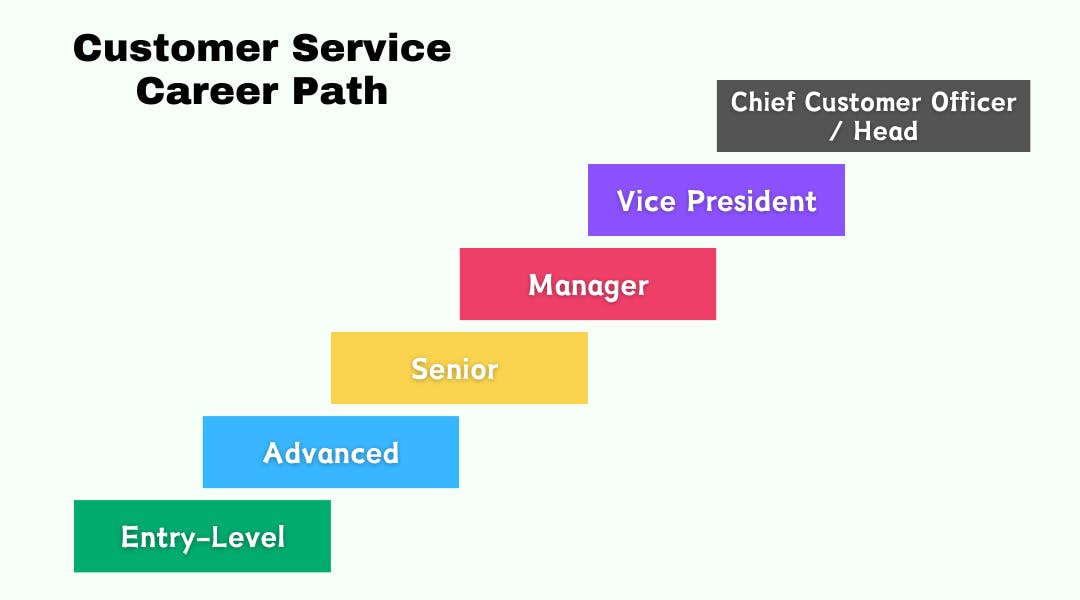
5. Customer Service Manager:
Responsibilities: Manage the overall customer service department, set departmental goals, allocate resources, and implement strategies to enhance customer satisfaction.
Skills: Strategic planning, budget management, leadership, and decision-making skills.
6. Director of Customer Experience:
Responsibilities: Oversee the entire customer experience strategy, collaborate with other departments, and ensure that customer service aligns with the overall company goals.
Skills: Strategic leadership, cross-functional collaboration, data analysis, and customer journey mapping.
7. Vice President of Customer Success:
Responsibilities: Lead the customer success team, align customer success initiatives with business objectives, and contribute to the development of company-wide customer-centric strategies.
Skills: Executive leadership, strategic planning, business acumen.
8. Chief Customer Officer (CCO) or Head of Customer Experience:
Responsibilities: Hold the highest position in customer-centric leadership, influence the company's overall strategy, and ensure the entire organization prioritizes and values the customer experience.
Skills: Executive leadership, strategic vision, communication at the highest levels of the organization.
It's important to note that not all organizations have the same structure or titles, and there may be variations in career paths based on company size, industry, and specific job responsibilities. Additionally, some individuals may specialize in areas such as quality assurance, training, or process improvement within the customer service domain. The individual's interests, and skills can also influence career progression, and the opportunities available within the organization.
How do you plan for your customer service career growth?
Planning for customer service career growth involves a strategic approach to personal and professional development. Here are steps you can take to plan and achieve career growth in customer service:
1. Self-Assessment:
Evaluate your current skills, strengths, and areas for improvement.
Identify your interests within the customer service field and consider where you see yourself in the future.
2. Set Clear Goals:
Establish short-term and long-term career goals. These could include achieving specific performance metrics, taking on leadership roles, or acquiring new skills.
Ensure your goals align with both personal aspirations and the company's objectives.
3. Skill Development:
Identify the skills necessary for your desired career path and focus on developing them.
Take advantage of training programs, workshops, and online courses to enhance your skills in areas such as communication, problem-solving, leadership, and technology.
4. Networking:
Build relationships with colleagues, supervisors, and mentors within and outside your organization.
Attend industry events, seminars, and webinars to expand your professional network.
5. Seek Feedback:
Request feedback on your performance from supervisors, colleagues, and customers.
Use constructive criticism to improve your skills and address areas that need development.
6. Performance Metrics:
Understand the key performance indicators (KPIs) relevant to your role.
Consistently meet or exceed performance metrics to demonstrate your value to the organization.
7. Seek Opportunities for Growth:
Volunteer for challenging assignments or special projects that align with your career goals.
Express your interest in taking on new responsibilities or roles within the customer service department.
8. Educational Pursuits:
Explore educational opportunities such as certifications, workshops, or degree programs that can enhance your knowledge and qualifications.
Stay informed about industry trends and best practices.
9. Create a Career Development Plan:
Outline a step-by-step plan for achieving your career goals.
Break down larger goals into smaller, manageable tasks, and set timelines for completion.
10. Mentorship:
Seek out a mentor within the organization or industry who can provide guidance and advice.
Learn from their experiences and use their insights to navigate challenges and make informed decisions.
11. Regularly Reassess:
Periodically reassess your career goals and adjust them based on your evolving interests and the organization's changing needs.
Be flexible in adapting your plan as necessary.
12. Stay Informed About Opportunities:
Keep an eye on internal job postings and be proactive in seeking out opportunities for advancement.
Network with individuals in leadership positions who may be aware of upcoming opportunities.
13. Balance Work-Life Skills:
Maintain a healthy work-life balance to prevent burnout and ensure sustained focus on your career development.
Remember that career growth is a continuous process. Regularly reflect on your progress, celebrate achievements, and be open to adjusting your plan based on new opportunities or changing circumstances. Developing a proactive and intentional approach to your career growth will increase your chances of success in the customer service field.